
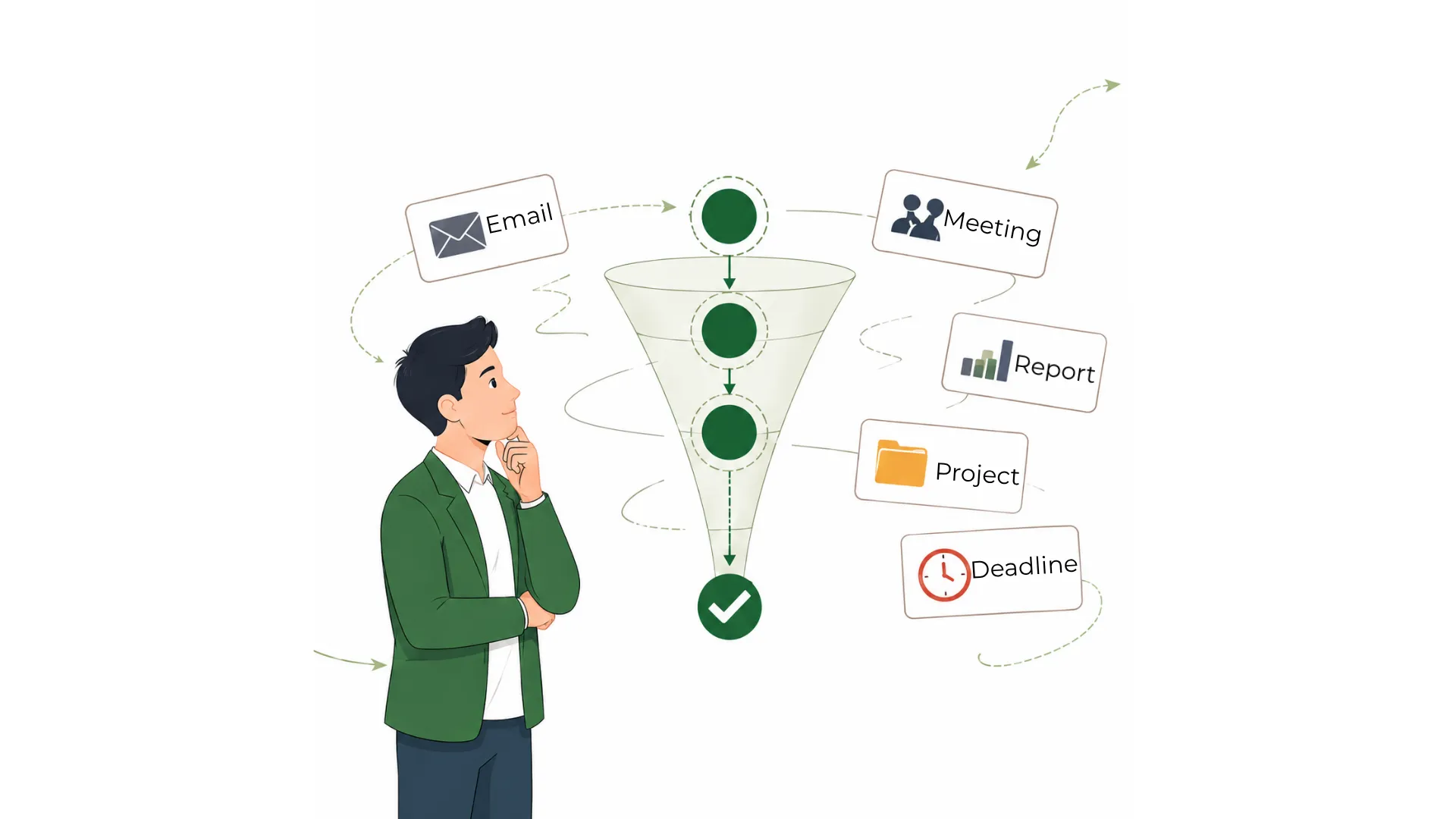

Leaders today are operating in a state of “ambient urgency,” where constant change, competing priorities, and relentless demands make everything feel equally important. Traditional prioritization and time-management frameworks were designed for an older reality, but things have changed. To make fewer, better, clearer high-stakes decisions amid ambient urgency, you should run priorities through three tests:
1. The Replacement Test
- Question: “Am I making this decision because I am uniquely positioned to make it or because I am the default person to make these decisions?”
You might find it difficult to let go of certain tasks because you have been doing them for so long and it’s become a default. But in that, you misjudge responsibility versus ownership. You treat every request as something that needs your personal attention, piling up work for yourselves. And under ambient urgency, that default is what buries you.
To break that cycle, you need to identify what priority is uniquely yours so you can direct your attention to it. If your answer reveals that you’re making this decision by default, it’s likely not your highest-leverage decision (for example, spending 20 minutes approving a critical expense report the finance manager could authorize). The decisions that pass this test share a signature: they cut across functions, they are close calls no amount of analysis will resolve, or they set direction. In each case you are not the default decision-maker; you are the only possible one.
2. The Compounding Test
- Question: “Will this decision create value that grows over time or is it just helping me manage today’s pressure?”
When every decision feels equally urgent, it creates a bias toward focusing on the ones where the impact feels immediate. The compounding test helps you break free from short-term thinking and helps distinguish between impact and urgency. It also helps you see which decisions have consequences that compound over time and which ones solve only what’s evident today and probably won’t matter next quarter.
Let’s go back to the example of the leader who let a good employee go because they didn’t have time to train them. That is a compounding test failure played out over time. Developing people compounds. Losing them erodes. If you fix an obvious short-term problem today—say, simply giving feedback to a high-potential employee every time they make a mistake—at the cost of leaving a subtle chronic problem unaddressed (continuous mentoring and development), you’re optimizing for the current state and relief in the moment, not progress.
3. The Fear Test
- Question: “Am I avoiding this decision because it’s not the right call or because I don’t want to face the consequences of making it?”
In working under a state of constant pressure, the problem isn’t that there are too many decisions to be made, but that ambient urgency creates an environment where you start postponing uncomfortable decisions. You want to let go, but letting go needs courage, and it creates fear—of being wrong, of losing status, of the unknown, or of conflict. Urgency makes for a good cover for postponing the hard calls—“I’ll get to it when I have the time” or “Let’s get some more data before we pull the plug on this client.” The discomfort never goes away; it just gets buried.
For example, your company is working on three important initiatives in tandem: AI adoption, operational improvements, and cost reduction. While they all seem like priorities, you know you’re compromising on speed because you don’t have enough resources to allocate to all three. You may avoid dropping any one initiative because it might seem like a failure on your part. That causes all three to get delayed and your company loses out to competitors. Using this question can help you realize your cost of inaction and why you’re avoiding the decision, consequently helping you make conscious tradeoffs.
Conclusion
Most leaders are already using some version of these tests informally. The value in making them explicit isn’t about reinventing the wheel. It’s about making critical decisions conscious, shareable, and repeatable across a team.
Old decision-making frameworks assumed that urgency was a failure of leadership. It’s not. It’s the condition of our times. The question is whether you will prioritize consciously or passively. With fewer, better, clearer guideposts for decision-making, you can exercise sounder judgment without slowing your team down.
Source: Harvard Business Reivew